A Town at the Center of a National Crisis
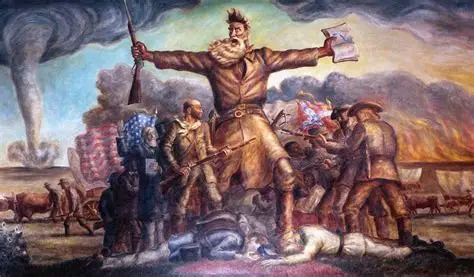
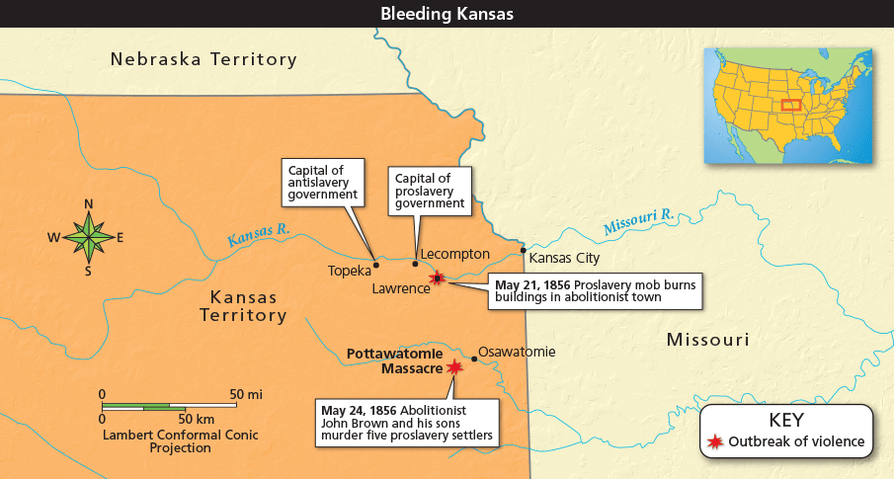
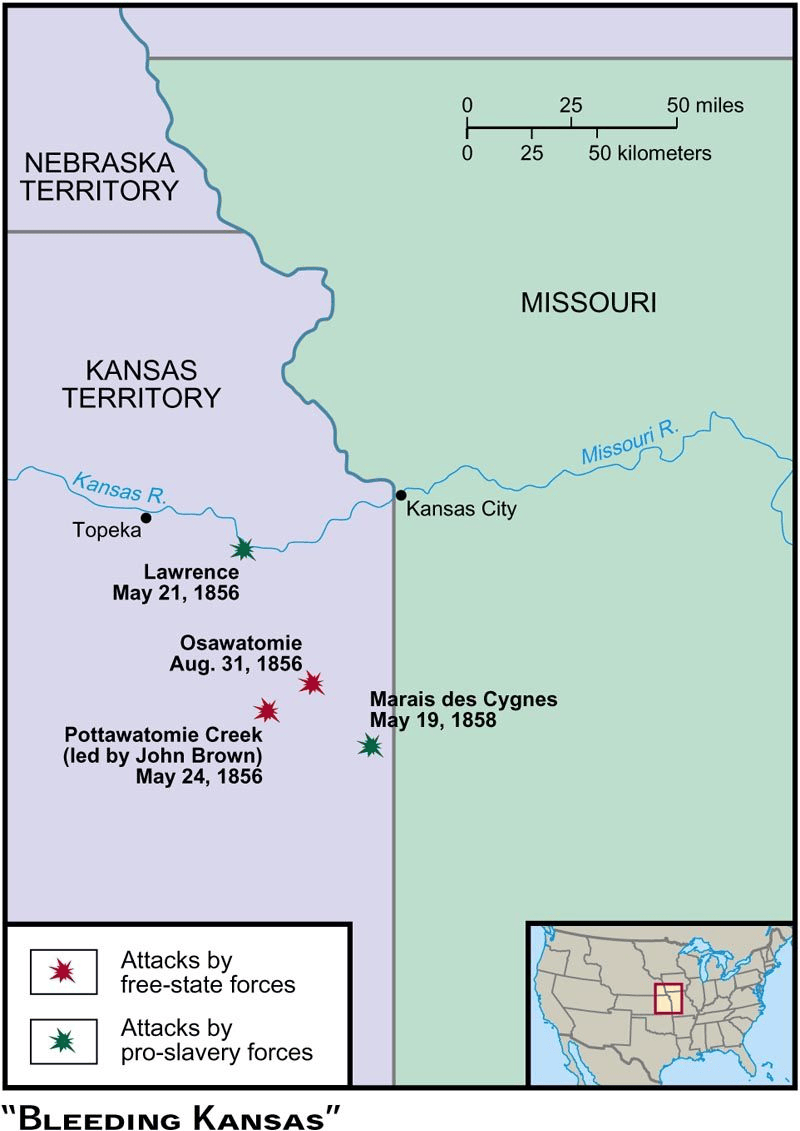
Osawatomie stands as one of the most significant communities in the era known as Bleeding Kansas, the turbulent territorial struggle that foreshadowed the American Civil War. What happened here was not abstract political debate — it was lived experience. Families, farms, and entire neighborhoods became part of a national conflict over slavery and freedom.
Osawatomie quickly emerged as a Free State stronghold, a center of abolitionist activity, and a symbol of resistance during one of the most defining chapters in Kansas history.
Free State Settlement and Early Leadership
Founded by settlers from Ohio and Massachusetts, Osawatomie grew from the convictions of families determined to keep Kansas a free territory. Among the most influential were the Adair family, whose cabin still stands today as one of the most authentic Free State landmarks in the state.
These early residents built a community grounded in anti‑slavery principles. As tensions escalated across Kansas Territory, Osawatomie became a refuge for Free State families and a gathering point for abolitionist leaders.
John Brown in Osawatomie


No figure is more closely tied to Osawatomie’s story than John Brown. During his time in Kansas Territory, Brown used Osawatomie as a strategic base, organizing Free State defenders and responding to pro‑slavery raids throughout the region.
Brown’s family lived in and around the town, and Osawatomie became the backdrop for some of the most defining moments of his life. His leadership, his losses, and his resolve all converged here, giving Osawatomie a lasting place in national memory.
View Inspecting History with Julian Gower YouTube video: 1854 Rural Kansas Cabin – John Brown’s Cabin – Bleeding Kansas Crisis- Pottawatomie Creek Massacre
The Battle of Osawatomie — August 30, 1856
On a summer morning in 1856, Osawatomie became the site of one of the most dramatic confrontations of Bleeding Kansas. A large pro‑slavery militia attacked the town, and Brown — with a small group of Free State fighters — attempted to defend it.
The battle was intense and deeply personal. Brown’s son Frederick was killed in the opening moments. Though Brown’s men fought bravely, they were outnumbered and forced to retreat. The attackers burned much of Osawatomie to the ground.
Despite the destruction, the battle became a turning point. Newspapers across the country reported on Brown’s stand, transforming Osawatomie into a national symbol of the fight against slavery.
View Inspecting History with Julian Gower YouTube video: Battle of Osawatomie: Bleeding Kansas – John Brown – How Losing Won – Prelude to Civil War
A National Turning Point
The violence in Osawatomie helped shift public opinion in the years leading up to the Civil War. The town’s story illustrated the stakes of the slavery debate and revealed how deeply divided the nation had become.
Osawatomie’s role in Bleeding Kansas demonstrated that the conflict was already being fought in towns, fields, and homes across the territory — long before the first shots at Fort Sumter.
Historic Sites Preserving the Story


John Brown Museum State Historic Site Features the historic Adair Cabin and exhibits interpreting Brown’s life and the Bleeding Kansas era.
The Adair Cabin Home of Rev. Samuel and Florella Adair, preserved as one of Kansas’s most important Free State landmarks.
Osawatomie History Museum Offers expanded interpretation of Osawatomie’s role in territorial conflict and its broader historical significance.
These sites allow visitors to walk the same ground where history unfolded and to understand the human stories behind the national struggle.
Visit Osawatomie
Osawatomie invites visitors, students, and history enthusiasts to explore its museums, historic landmarks, and educational programs. The town’s role in Bleeding Kansas is a powerful chapter in America’s story — one preserved with care and shared with purpose.
View Inspecting History with Julian Gower YouTube video: Osawatomie Kansas – 1919 Missouri Pacific Caboose, Marsh Arch Bridge, John Brown’s Last Letter
To learn more about exhibits, events, and visiting opportunities, explore the Osawatomie Museum Foundation’s resources or plan your next trip to this historic Kansas community.
